Lipids, Innate Immunity and
Pathogenesis in Disease

Understanding how cells and organelles work—and connecting that biology to disease.

Our name is also a nod to the lipids we study. We explore how they shape cells and influence immunity, metabolism and disease.

Department of Pathology · Dalhousie University
Halifax, Nova Scotia, Canada

From molecules to tissue01 / 04
One continuous view, from a lipid bilayer to intestinal tissueZoom out from the lipid bilayer of an endosome, find the endosome inside an intestinal epithelial cell, then see the cell alongside its neighbours. The bilayer includes cholesterol, phosphatidylserine (PS), phosphatidylinositol 3-phosphate (PI3P) and NOD2 anchored by two acyl chains. PS and PI3P headgroups face the cytosol. A bacterium is inside the endosome. Intestinal tissue includes twelve luminal bacteria, some with flagella, and a macrophage engulfing bacteria below the epithelium. This is a conceptual illustration with illustrative proportions, not an experimental image or a quantitative scale drawing.P

A membrane bilayer

Representative lipids: cholesterol, phosphatidylserine (PS) and phosphatidylinositol 3-phosphate (PI3P).

Pull back to see the connections

Conceptual illustration · representative lipids, not to scale

Recent news

  • Thanks to Victoria from 3i for installing our Vector3: Spinning-TIRF & Photomanipulation modalities on our SoRa spinning disc confocal. Funded by an NSERC RTI.
  • A big thank-you to the Cancer Research Society for a two-year grant to support our work on TRAIL signaling in cancer.
  • Welcome to Jackie Toner (BMB) and Ronan Jensen (Pathology), two new MSc candidates in the lab. Also, welcome to Abby (BMB), Chelsea (BMB), and Ross (M&I), Honours students for 2026-2027.
  • Congrats to Parsa on successfully defending his MSc thesis on the regulation of PNPLA3 and PUFA-TAG hydrolysis. Good luck in medical school in Ireland!
What connects our work

From lipid biochemistry
to cellular function.

We study how lipids are made, distributed and used, and how these processes shape membranes, organelles and cells.

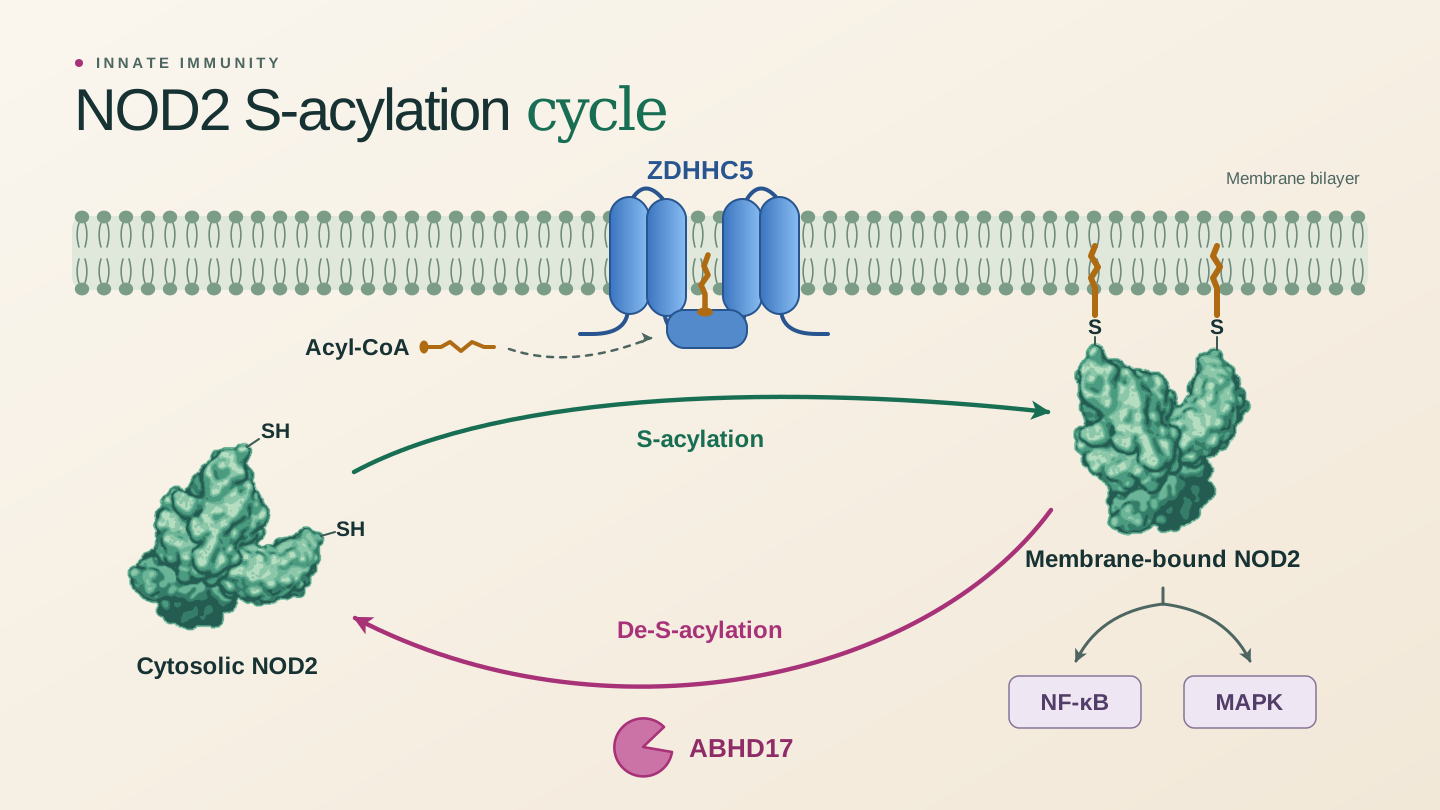
The NOD2 S-acylation cycle. ZDHHC5 attaches acyl chains that anchor NOD2 to the membrane. ABHD17 reverses this step. Membrane-bound NOD2 is linked to NF-κB and MAPK signalling.View full-size schematic

Lipids & innate immunity

How do NOD1 and NOD2 reach the membranes where they help cells detect bacteria?
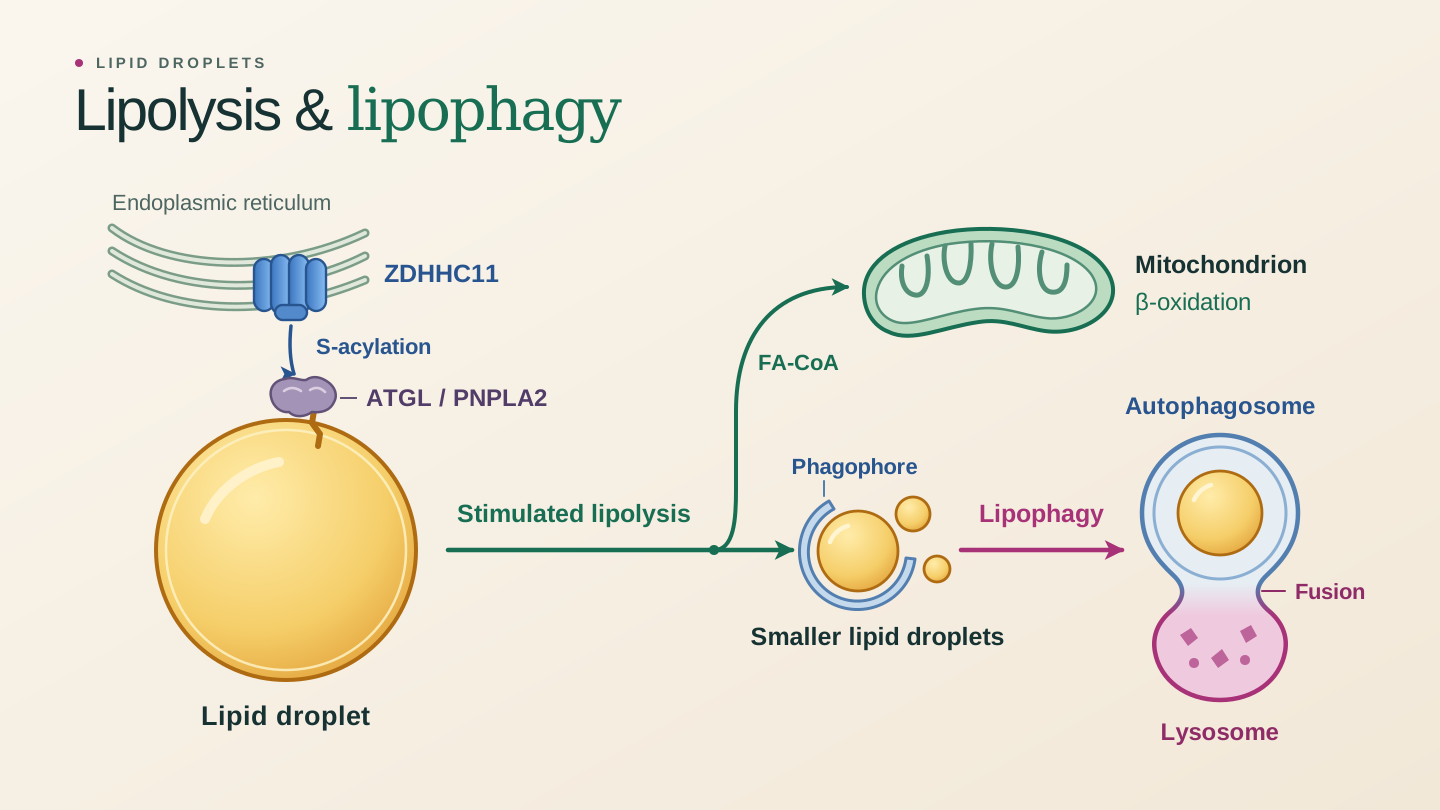
ATGL-mediated lipolysis and lipophagy. ZDHHC11 S-acylates ATGL at the lipid droplet. Stimulated lipolysis supplies fatty acids for mitochondrial β-oxidation. An open phagophore engulfs a smaller droplet. The resulting autophagosome fuses with a lysosome.View full-size schematic

Lipid droplets, lipolysis & lipophagy

How do lipid-modified enzymes control the storage and mobilisation of cellular fat?
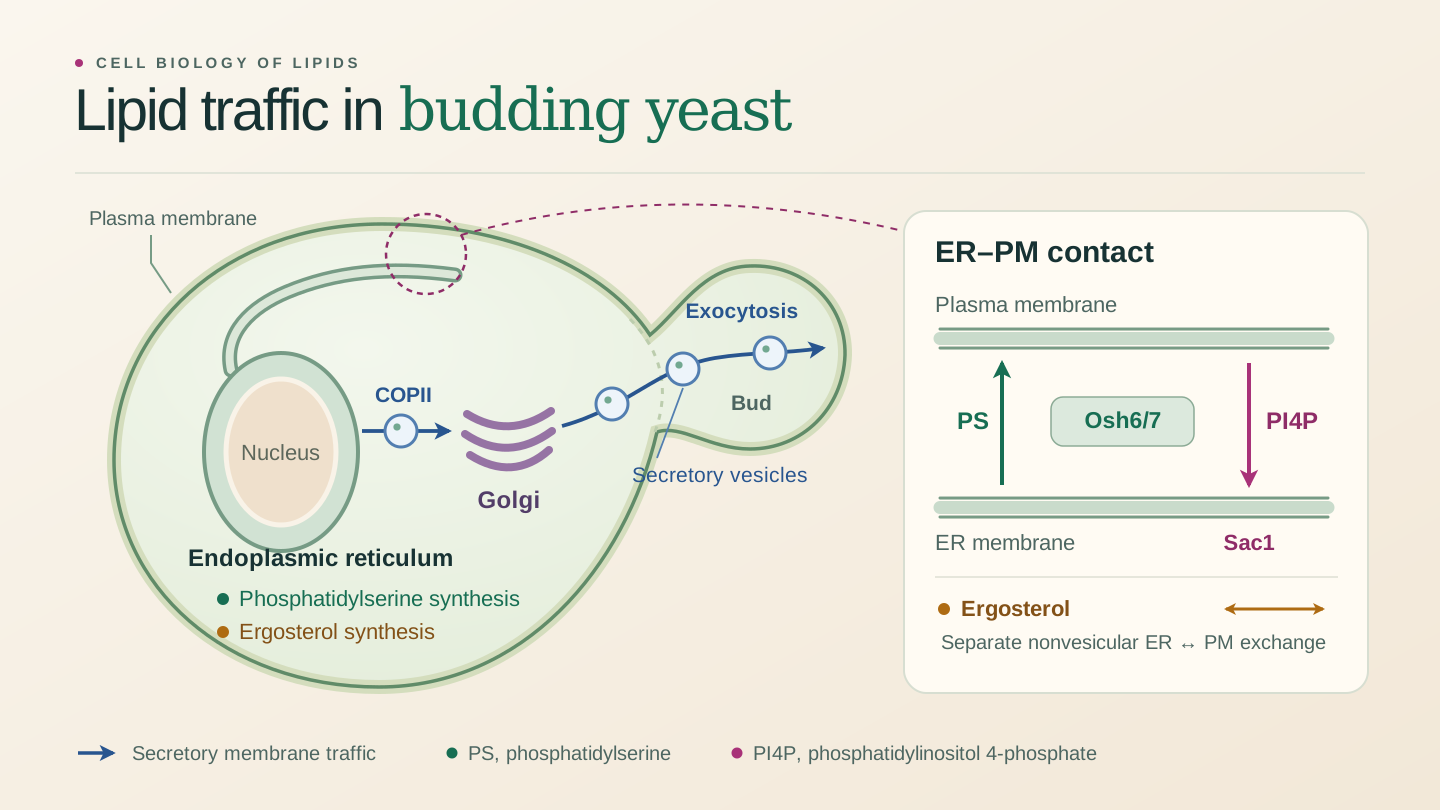
In budding yeast, Osh6 and Osh7 exchange phosphatidylserine for PI4P at an ER–plasma membrane contact. Ergosterol also moves nonvesicularly. A separate secretory route carries membrane through COPII vesicles and the Golgi to the bud.View full-size schematic

Cell Biology of Lipids

How do phosphatidic acid, phosphatidylserine, cholesterol and phosphoinositides shape membrane function and cellular lipid balance?
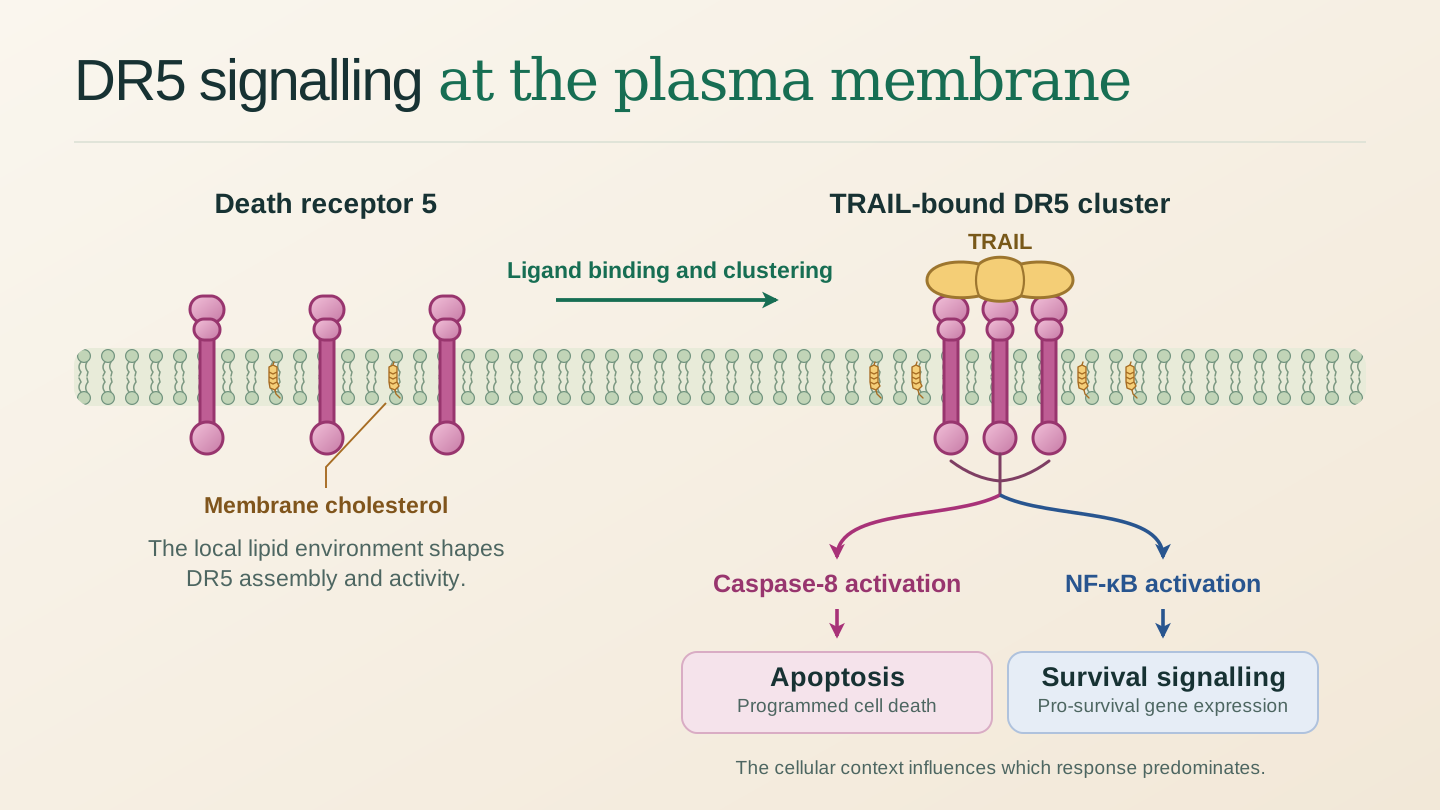
TRAIL binds death receptor 5 and promotes receptor clustering. Membrane cholesterol shapes DR5 assembly and activity. TRAIL–DR5 signalling can engage caspase-8 and apoptosis or activate NF-κB and promote survival.View full-size schematic

Plasma membrane compartmentalization and receptor signaling

How does the local membrane environment shape the signals sent by death receptor 5 (DR5)?
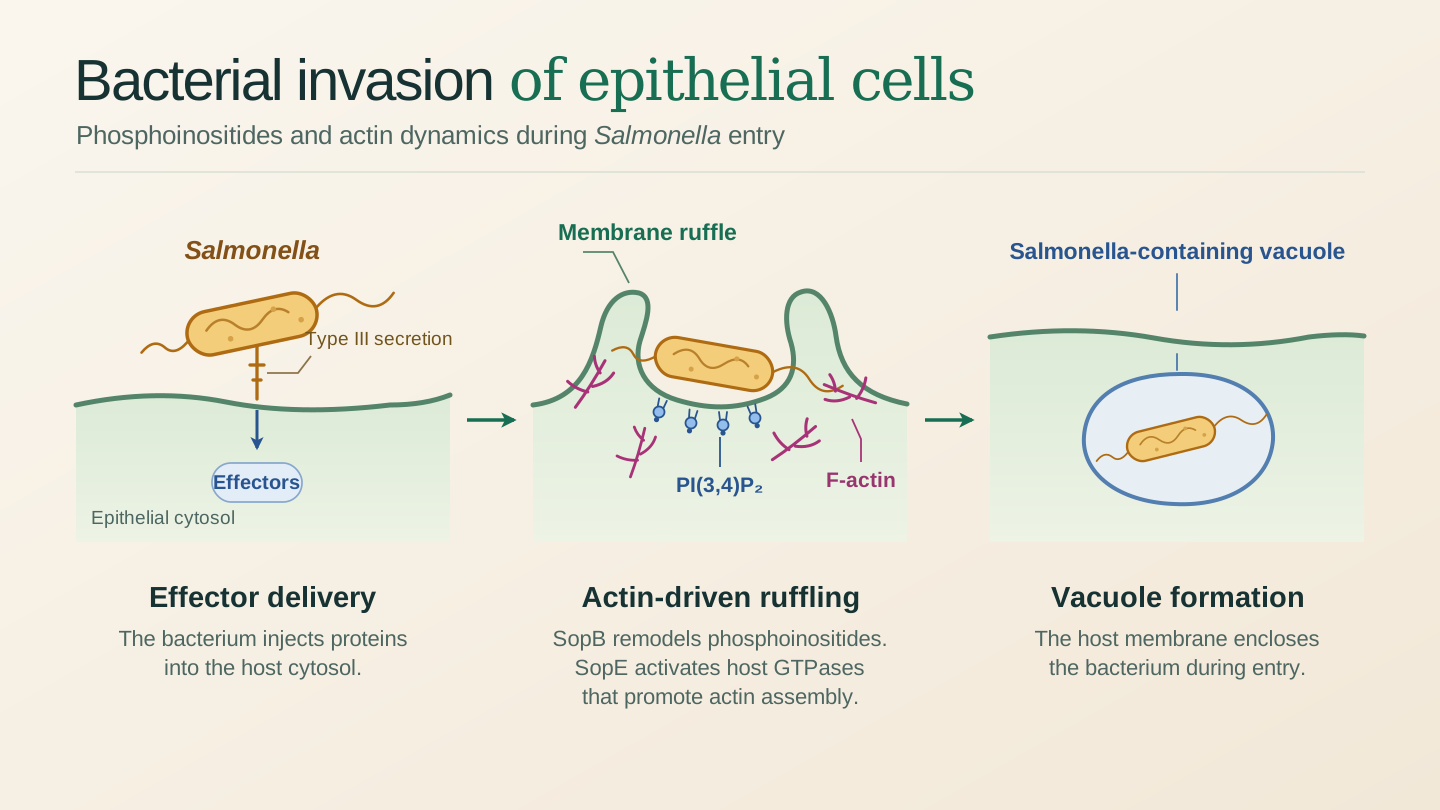
Salmonella injects effectors into an epithelial cell. SopB remodels phosphoinositides and SopE promotes actin assembly. Membrane ruffles surround the bacterium as it enters a Salmonella-containing vacuole.View full-size schematic

Phosphoinositides and actin dynamics

How does Salmonella remodel host phosphoinositides and actin to enter epithelial cells?

Selected discoveries

Questions become
evidence.

A few entry points into our published work.

Browse publications
Science starts with a question

Bring your curiosity.

Interested in the cell biology of lipids, membrane biology, and host-pathogen interactions? Get in touch to discuss our research.

Get in touch